Introduction
DiDi Ride’s recent procurement of 700 electric vehicles (EVs) from BYD for Mexico’s ride-hailing market marks more than a routine fleet update—it’s the first step in a sweeping plan to reshape the country’s transportation landscape. The global mobility leader has committed to introducing 100,000 Chinese-made EVs in Mexico by 2030, partnering with a coalition of domestic automakers (including BYD as a key member) and local stakeholders to tackle dual challenges: cutting urban air pollution and boosting drivers’ long-term financial stability . For cities like Mexico City—where smog often exceeds World Health Organization limits—and Monterrey, where traffic gridlock wastes hours of daily commutes, this initiative delivers a solution that blends global EV expertise with on-the-ground practicality. As the first batch of BYDs hits Mexican roads, DiDi Ride’s program signals a turning point for sustainable mobility in Latin America, one centered on the needs of riders, drivers, and communities alike.
I. Localized Rollout: Chinese EVs Tailored for Mexican Roads
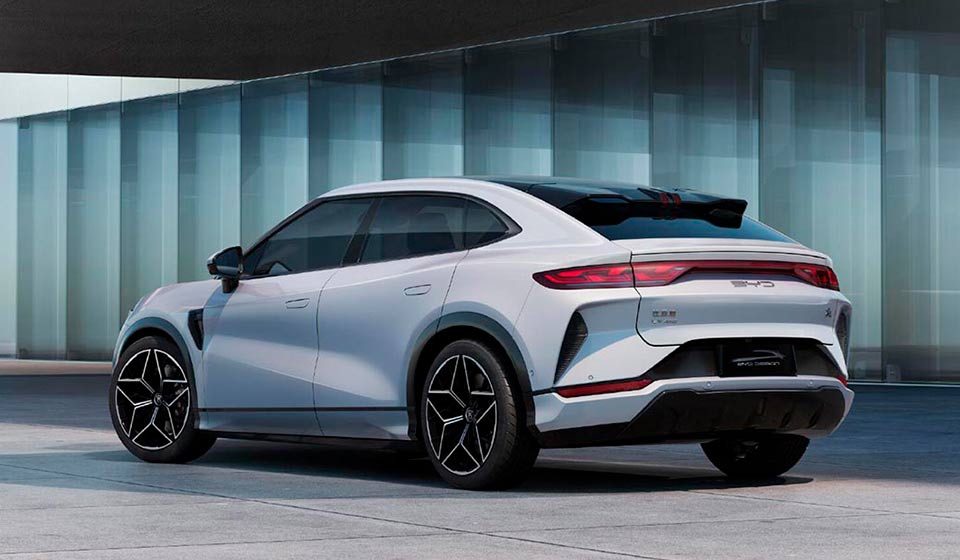
The 700 BYD EVs entering DiDi Ride’s Mexican fleet are just the start of a diverse Chinese-made lineup. BYD’s contribution includes the compact Dolphin Mini, ideal for weaving through Mexico City’s narrow streets, and the plug-in hybrid King, built to handle Monterrey’s hilly terrain . But these models will soon be joined by vehicles from other Chinese partners like GAC, Changan, and JAC—brands already gaining traction in Mexico, where Chinese automakers collectively held a 19.5% market share in 2024 . For drivers like Ana, who logs 230 kilometers daily between Mexico City and Cuernavaca, the tailored design of these EVs has been transformative: “My BYD never loses power on steep roads, and I’ve heard GAC’s model has even more cargo space—perfect for carrying my tools.”
DiDi Ride is solving the biggest barrier to EV adoption—charging access—for its entire multi-brand fleet. Through partnerships with VEMO and Livoltek, Mexico’s leading charging operators, the company plans to expand access to 2,200 charging points across 18 cities by 2025, up from 1,200 today . For Carlos, a DiDi Ride driver in Guadalajara, this means no more sacrificing trips to find a charger: “There’s a VEMO station near my home now. I charge overnight, and my fuel costs dropped by 65%—that’s extra money for my kids’ school fees.” This convenience is critical: a 2024 survey found 71% of Mexican ride-hailing drivers cite “nearby charging” as their top requirement for switching to EVs .
Early results validate the approach. In Monterrey, where the first BYDs launched in late 2024, passenger satisfaction scores jumped 19% thanks to quieter rides, while drivers reported a 16% earnings boost from lower maintenance and fuel costs . These gains are expected to scale as more Chinese models enter the fleet.
II. Strategic Synergy: DiDi Ride’s Ecosystem Meets China’s EV Industrial Strength
The initiative’s power lies in a multi-party alliance that combines DiDi Ride’s operational expertise with China’s diverse EV manufacturing ecosystem. DiDi Ride brings decades of experience managing over 400,000 EVs globally, including data-driven tools to optimize routes and predict charging needs . Its Chinese automaker partners, meanwhile, offer a range of strengths: BYD leads in battery technology and local market share (40,000 units sold in Mexico by 2024), GAC contributes affordable compact models, and Changan brings expertise in rugged designs for rural routes .
Localization will further strengthen this synergy. BYD is advancing plans for a Mexican factory that could produce 100,000+ EVs annually, while SAIC’s MG brand is investing $2 billion in a local plant and R&D center . This local production slashes import tariffs and delivery times, making the 100,000-EV target economically feasible—without it, costs would rise by an estimated 22% .
DiDi Ride is also breaking down financial barriers for drivers through its “DiDi Préstamos” program, which has issued 500,000+ loans in Mexico. The program offers up to 30,000 Mexican pesos to lease or buy EVs from any of its Chinese partners, with approval based on ride-hailing performance rather than traditional credit scores . For Jorge, a driver in Puebla who previously couldn’t get a bank loan, this was life-changing: “I used to rent a gas car for 1,600 pesos a week. Now I’m paying off a BYD, and I save 900 pesos weekly.”
The alliance aligns with local policy goals too. New León state, which signed a cooperation memo with DiDi Ride, has streamlined EV registration for the fleet—cutting paperwork from two weeks to three days—as part of its “green transportation hub” vision .
III. Beyond Rides: Reshaping Mexico’s Mobility and Industry
DiDi Ride’s 100,000-EV goal carries profound environmental weight. The company estimates the fleet will reduce Mexico’s carbon emissions by 500,000 tons annually by 2030—the equivalent of planting 8.5 million trees . For Mexico City, this could cut transportation-related emissions by 12%, a critical step for a city linked to 9,000 pollution-related premature deaths yearly .
Industry-wide, the initiative is shifting competition. Uber, which controls 60% of Mexico’s ride-hailing market, has yet to announce a comparable multi-brand EV commitment—only 2% of its local fleet is electric . DiDi Ride’s move is already winning over eco-conscious riders: 45% of Mexican passengers now “actively choose” DiDi Ride when they see an EV option .
The program is also boosting Mexico’s EV supply chain. Since Chinese automakers announced local expansion plans, 12 component firms—including battery maker CATL and glass producer Fuyao—have followed, creating an estimated 10,000 jobs . This “ripple effect” advances Mexico’s goal of becoming a Latin American EV hub; before the alliance, only three EV component firms operated locally .
Long-term, the initiative is a blueprint for Latin America. DiDi Ride is already scaling its charging network to Brazil (10,000 stations by 2025), while BYD’s success adapting EVs for Brazil’s rough roads proves regional transferability . “Ride-hailing is the perfect gateway for EVs,” says DiDi Ride’s Mexico GM Juan Andrés Panama. “Our drivers use cars all day, so benefits add up fast. What works here can work in São Paulo or Bogotá too.”
Conclusion
DiDi Ride’s Mexican venture isn’t just a fleet expansion—it’s a model for how global mobility leaders and diverse manufacturing ecosystems can solve local problems. The 700 initial BYDs are just the first thread in a broader tapestry: by 2030, 100,000 Chinese-made EVs from BYD, GAC, Changan, and more will redefine how Mexicans commute, earn, and breathe. As charging networks grow, financial barriers fall, and local production ramps up, this alliance could accelerate Latin America’s shift to sustainable mobility—proving that when global expertise meets local needs, real change is possible. For DiDi Ride, Mexico is more than a market—it’s a test case for a future where every ride is clean, affordable, and equitable.