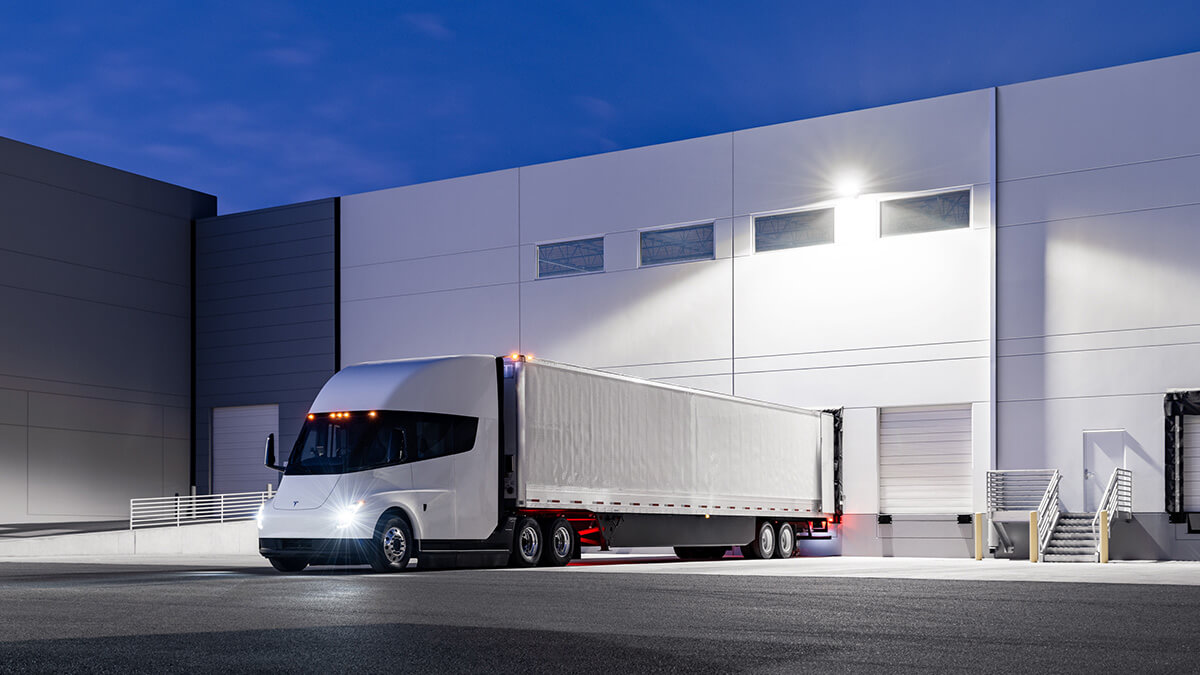
1. The Battle Over Technical Standards: The Megacharger's Closed System Dilemma
- The Conflict Between Proprietary Charging Networks and Universal Industry Standards
- The Tesla Semi relies on a proprietary Megacharger system (750-1000kW high-voltage fast charging). Its communication protocol uses a modified version of ISO 15118 rather than the mainstream OCPP 2.0, resulting in incompatibility with third-party chargers. As a multinational logistics company, PepsiCo needs to ensure the compatibility of its vehicles at partner charging stations (such as ports and warehouses).
2.Compared to competitors like Volvo's VNR, which uses the CCS1
Standard and is compatible with 90% of public chargers in Europe and the United States in 30 minutes, Tesla's closed system significantly increases infrastructure costs for customers.
Charging Efficiency Promises: Tesla claims the Megacharger can achieve a "70% charge in 30 minutes," but actual tests show a 50% drop in power when battery temperatures exceed 45°C. In tests at PepsiCo's Modesto plant, the average daily charging time for the fleet was 1.8 hours longer than refueling a diesel vehicle.
II. Business Game: From Technological Leadership to a Crisis of Business Confidence
The Chain Reaction of Production Delays
Since its 2017 release, the Tesla Semi has experienced five production delays, achieving only 12% of its original 2024 annual production target of 50,000 units. Unable to secure sufficient vehicles, PepsiCo was forced to restart its diesel fleet leasing program.
Dispute over Total Cost of Ownership (TCO) Calculations
Tesla advertises that the Semi's electricity cost per mile is 2.5 times lower than diesel, but this does not include the cost of Megachargers (approximately $250,000 per station). PepsiCo's calculations show that it will take five years of operation to recoup the initial investment, far exceeding the expected three years.
III. Industry Ecosystem: The Wave of Standard Harmonization for Electric Heavy-Duty Trucks
1.The Demonstration Effect of the European and Chinese Markets
The EU mandates that all commercial charging stations support the OCPP 2.0+CCS protocol by 2030. China's GB/T 20234.3-2025 standard further incorporates charging compatibility into product certification. Companies like DHL have shifted to procuring mixed-brand fleets to mitigate risk.
2.Tesla's Window for Strategic Adjustment
Industry analysts suggest Tesla launch a CCS adapter module (like the dual-protocol design of the Mercedes-Benz eActros) or open up its Megacharger technology patents in exchange for support from ecosystem partners. Currently, 73% of its commercial vehicle orders come from companies tied to Tesla's energy business (such as Pride Group), while the proportion of general customers continues to decline.
Conclusion
PepsiCo's order reduction is essentially a standards battle as the electric heavy-duty truck industry transitions from technology verification to commercialization. If Tesla insists on a closed system, it risks repeating the isolated fate of its passenger car Supercharger network; opting for open collaboration could result in the loss of its short-term technological advantage. The outcome of this battle will profoundly impact the progress of global zero-carbon logistics.