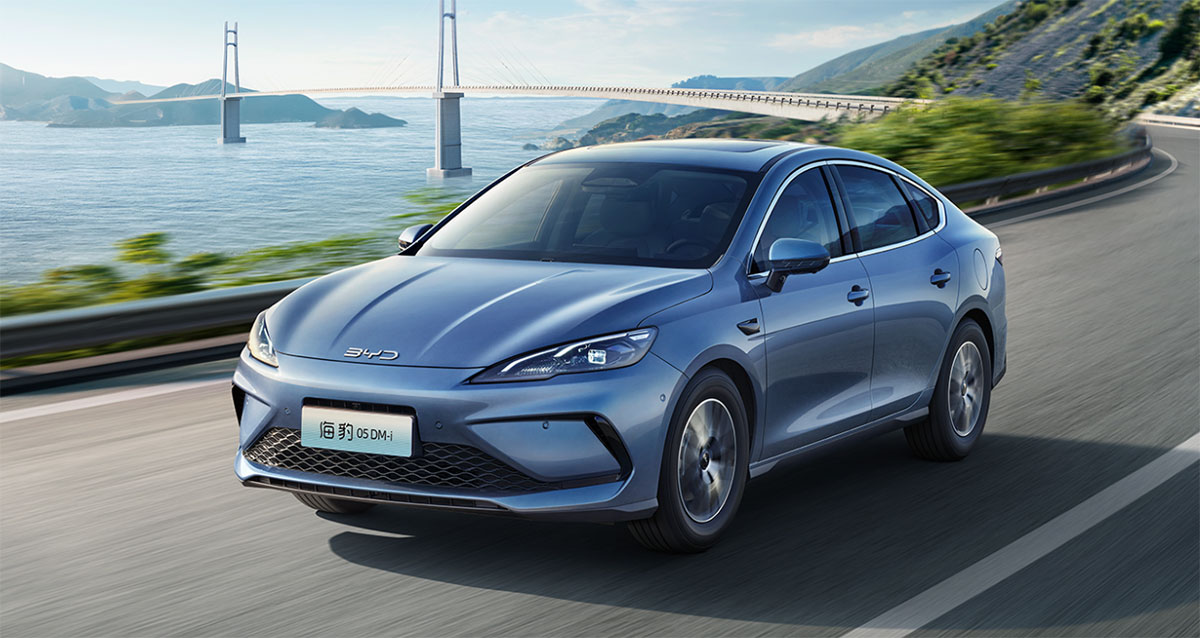
BYD DM-i vs. Tesla BEV: Which Suits Families Without Home Chargers?
Introduction
For many families, the shift to new energy vehicles is hindered by a common barrier: the lack of home charging piles. This dilemma forces buyers to choose between two dominant technologies: BYD’s DM-i "oil-electric dual-supply" hybrid system and Tesla’s pure electric vehicles (BEVs). While both represent the forefront of green mobility, their adaptability to charging-scarce environments varies drastically. This article examines their performance through real family scenarios, from daily commutes to long-distance trips, to determine which better fits households without fixed charging access.
Daily Commuting: The "Plug-in Optional" Advantage
Weekday mornings often set the tone for a vehicle’s practicality. For a family in a residential area without charging facilities, the BYD DM-i turns this stress into a non-issue. Take the 2025 Song PLUS DM-i: its 160km pure electric range covers most urban commutes—say, a 25km round trip to school and the office. Even if you forget to hunt for a public charger on weekends, the system seamlessly switches to hybrid mode with a Low power fuel consumption of 4.5-5.5L/100km, eliminating the panic of low battery warnings.
Tesla’s BEVs, by contrast, demand proactive planning. The 2025 Model 3 Rear-Wheel Drive version delivers 11-12kWh/100km efficiency, but relying solely on public fast charging flips its cost advantage. Public charging fees (including service charges) reach 1.2 yuan/kWh—3-4 times higher than home charging—pushing per-kilometer costs to 0.48 yuan, surpassing DM-i’s 0.33 yuan when fueled. Worse, weekly charging becomes a chore: two 1-hour sessions (including queuing) add up to 104 lost hours annually—equivalent to over 4 workdays.
Long-Distance Travel: The Anxiety Divide
Holiday road trips expose the biggest rift between the two technologies. Imagine a 600km family trip to visit grandparents during National Day. The Tesla driver faces a logistical nightmare: the Model 3’s 430km real-world range (after 70-80% discount from official figures) requires at least one mid-journey charge. In 2025, popular service areas like Zhengzhou East on the Beijing-Hong Kong-Macao Expressway saw Tesla owners waiting up to 4 hours for a charging slot, with 60+ cars queuing for just 4 piles. Even with V3 Superchargers adding 250km in 15 minutes, queuing erodes travel time and family mood.
The BYD DM-i turns this into a non-event. With a full tank and partial charge, it delivers over 1,000km of combined range. When the 160km electric buffer depletes, the 1.5L engine kicks in, maintaining 6-7L/100km on the highway—no detours, no queues. Refueling takes 3 minutes, matching traditional cars but with lower fuel bills. Cold weather amplifies this gap: at -10°C, Tesla’s range drops 30-50% due to battery heating, while DM-i uses engine waste heat for warmth, barely affecting efficiency.
Total Cost of Ownership: Beyond Purchase Price
Family budgets stretch beyond the sticker price, and here DM-i holds a clear edge. The 2025 Song PLUS DM-i starts at 115,800 yuan, less than half the Model 3’s 235,500 yuan entry price. Insurance widens the gap: Tesla’s annual premium of 7,670 yuan is double that of comparable BYDs.
Maintenance costs follow suit. DM-i requires engine servicing, pushing annual upkeep to 1,200 yuan—still cheaper than Tesla’s 840 yuan? No, wait: Tesla’s "low maintenance" myth fades without home charging. Frequent fast charging accelerates battery degradation, and repairs cost far more than DM-i’s mechanical fixes. Over 8 years, DM-i’s total energy costs (54,000 yuan) are 28% lower than a Tesla relying on public fast charging (76,800 yuan). Resale value further favors DM-i: Tesla BEVs without home charging records lose 60-65% of value in 5 years, while DM-i retains fuel-car-level Value retention rate of 55-60%.
Conclusion: The Pragmatic Choice for Charging-Scarce Families
Tesla’s BEVs excel for tech enthusiasts with home charging, but for families without fixed piles, BYD’s DM-i is the pragmatic winner. Its "oil-electric dual-supply" system eliminates range anxiety, slashes total costs, and adapts to real family life—whether weekday commutes, weekend errands, or holiday road trips. Tesla’s supercharger network, while impressive, cannot replicate the convenience of a gas station, especially during peak travel times.
For households prioritizing hassle-free mobility, lower costs, and adaptability, the BYD DM-i is more than a car—it’s a solution. Tesla remains a choice for those willing to plan around charging, but for most families without home piles, DM-i’s "no-compromise" approach makes it the clear better fit.