As electric vehicles become more popular, EV owners are becoming familiar with a new automotive term: frunk.
But what is a frunk? How is it different from a traditional trunk? What can you store inside it, and is it worth installing an aftermarket frunk or frunk liner?
This guide explains everything EV owners need to know about the difference between a frunk and a trunk.
What Is a Frunk?
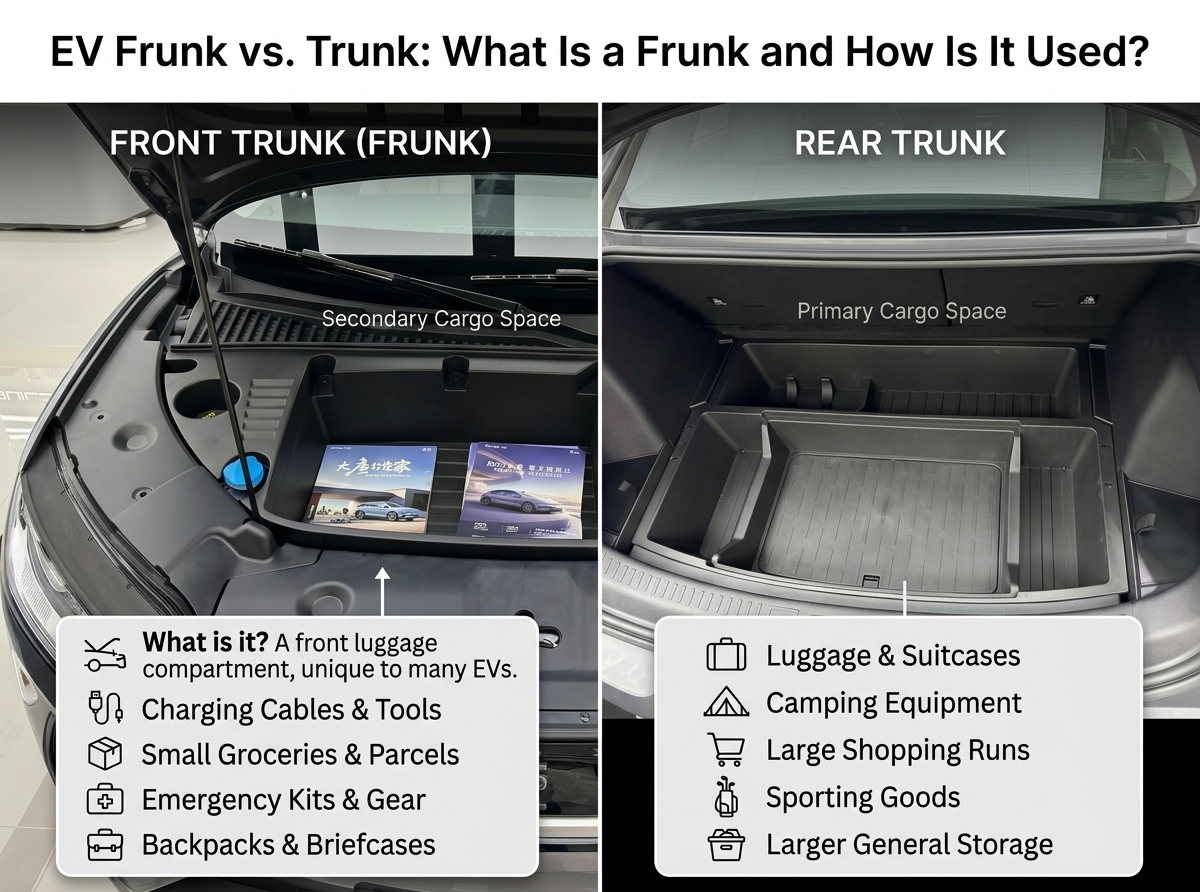
A frunk is the front storage compartment of a vehicle. The word combines “front” and “trunk.”
In a conventional gasoline-powered car, the front area is usually occupied by a large internal-combustion engine. Most electric vehicles use a much smaller electric motor and different drivetrain packaging, leaving additional space under the front hood.
This space can be designed as a storage compartment for:
- Charging cables
- Small luggage
- Groceries
- Tool kits
- Emergency equipment
- Outdoor and camping gear
- Sports equipment
The frunk is most commonly found on battery-electric vehicles, although some rear-engine and mid-engine sports cars also have front storage compartments.
What Do EV Owners Call It?
The most common term in the United States is frunk or front trunk.
Depending on the market, EV owners may also use the following expressions:
| Market or user group |
Common term |
| United States |
Frunk, front trunk |
| Canada |
Frunk, front trunk |
| United Kingdom |
Frunk, front boot, front luggage compartment |
| Australia |
Frunk, front boot |
| General automotive searches |
EV front storage, front cargo area |
Overseas users or buyers typically search by vehicle model + frunk or trunk to find the products they want, such as: BYD Atto 2 frunk, BYD Seal frunk, BYD Sealion 6 frunk, BYD Sealion 6 trunk, etc.
In American English, the main rear storage compartment is called the trunk. In British English, it is usually called the boot. Some British EV owners use the informal term froot, formed from “front” and “boot,” but “frunk” and “front boot” are more useful terms for international product content.
For SEO purposes, a product page or article should normally include both EV frunk and front trunk, because different users search for the same product using different terminology.
Frunk vs. Trunk: What Is the Difference?
The main difference is location and capacity.
A frunk is located at the front of the vehicle, underneath the hood. A trunk is normally located at the rear of the vehicle.
The rear trunk is usually the primary cargo area and is generally larger. It may also include a liftgate or hatchback opening, making it easier to load large luggage, boxes and shopping bags.
The frunk is usually smaller, but it provides an additional storage area. The two compartments can be used together to increase the vehicle’s total cargo capacity.
| Feature |
EV Frunk |
Rear Trunk |
| Location |
Front of the vehicle |
Rear of the vehicle |
| Typical size |
Small to medium |
Medium to large |
| Main purpose |
Additional storage |
Main cargo storage |
| Access |
Front hood or powered frunk lid |
Trunk lid, hatch or liftgate |
| Common contents |
Charging cable, groceries, tools |
Luggage, boxes, shopping bags |
| Water protection |
Depends on vehicle design |
Usually protected by the main body |
| Loading height |
Often lower and deeper |
Usually easier for large items |
What Materials Are Used in an EV Frunk?
An EV frunk is usually made from several materials rather than one single material.
Plastic or polymer storage tub
Many factory frunks use molded plastic or composite polymer tubs. These materials are lightweight, corrosion-resistant and relatively easy to clean.
Rubber sealing strips
Weather sealing around the hood and frunk opening helps protect the cargo area from rain, dust and moisture. The quality of the seal can vary between vehicle models.
Carpet or felt lining
Some frunks use carpet or felt panels to reduce noise and improve appearance. These materials can be comfortable for luggage but may absorb water, dirt and odors.
Rubber or TPE liners
Aftermarket frunk liners are often made from rubber, thermoplastic elastomer or other waterproof polymers. These liners can help protect the original frunk surface from:
- Mud
- Water
- Food and drink spills
- Oil and grease
- Sand
- Pet hair
- Scratches
For everyday EV use, a raised-edge waterproof liner is often more practical than a flat carpet mat.
What Can You Store in an EV Frunk?
The best items for a frunk are compact, frequently used and potentially dirty or wet.
Common examples include:
Charging equipment
Many owners use the frunk to store a portable EV charging cable, adapters and charging accessories. Keeping charging equipment in the front compartment can free up space in the rear trunk.
Groceries
A sealed frunk can be useful for grocery bags, takeaway food and drinks. However, users should avoid placing hot food, liquids or unsecured containers in the frunk unless the compartment is designed for that purpose.
Emergency supplies
A frunk can hold:
- First-aid kits
- Jumper cables for low-voltage systems
- Warning triangles
- Flashlights
- Gloves
- Tire repair kits
- Portable air compressors
Outdoor gear
Some owners use the frunk for hiking, camping, beach and sports equipment. A washable liner is especially useful for wet or dirty gear.
Small luggage
The frunk is suitable for small suitcases, backpacks and camera bags. Large suitcases may be easier to load through the rear hatch.
Advantages of an EV Frunk
More usable cargo space
The biggest advantage is additional storage. A frunk gives EV owners a second cargo compartment instead of relying only on the rear trunk.
Better organization
Separating charging equipment, tools or dirty items from clothing and luggage can make the vehicle easier to organize.
Cleaner rear trunk
Charging cables and emergency equipment can remain in the frunk, leaving the rear cargo area available for passengers’ bags and groceries.
Potentially safer storage
Some frunks are enclosed and lockable, which can provide a secure place for smaller items. Owners should still check the vehicle manufacturer’s instructions and avoid storing valuables in plain sight.
Easier cleaning with a liner
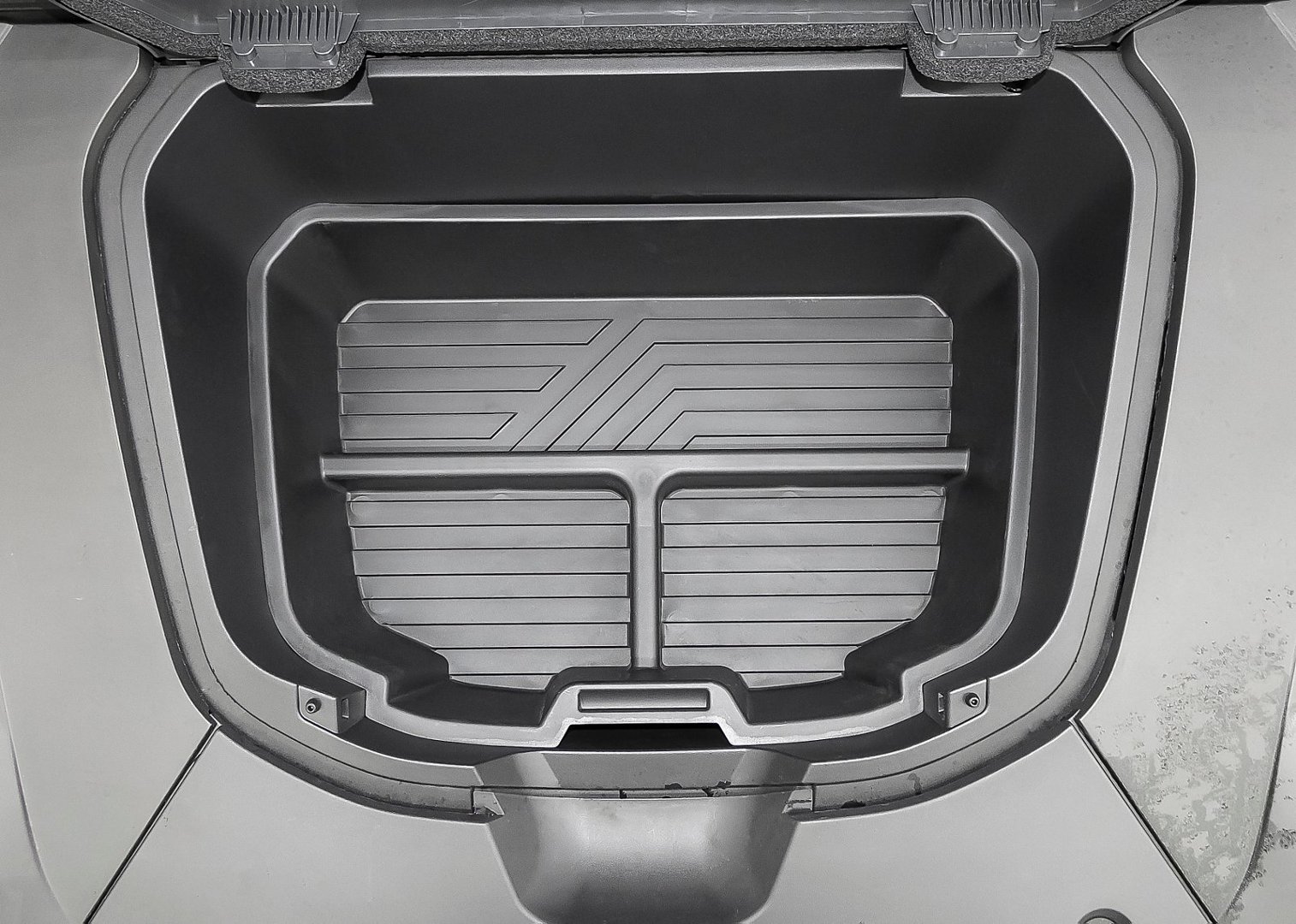
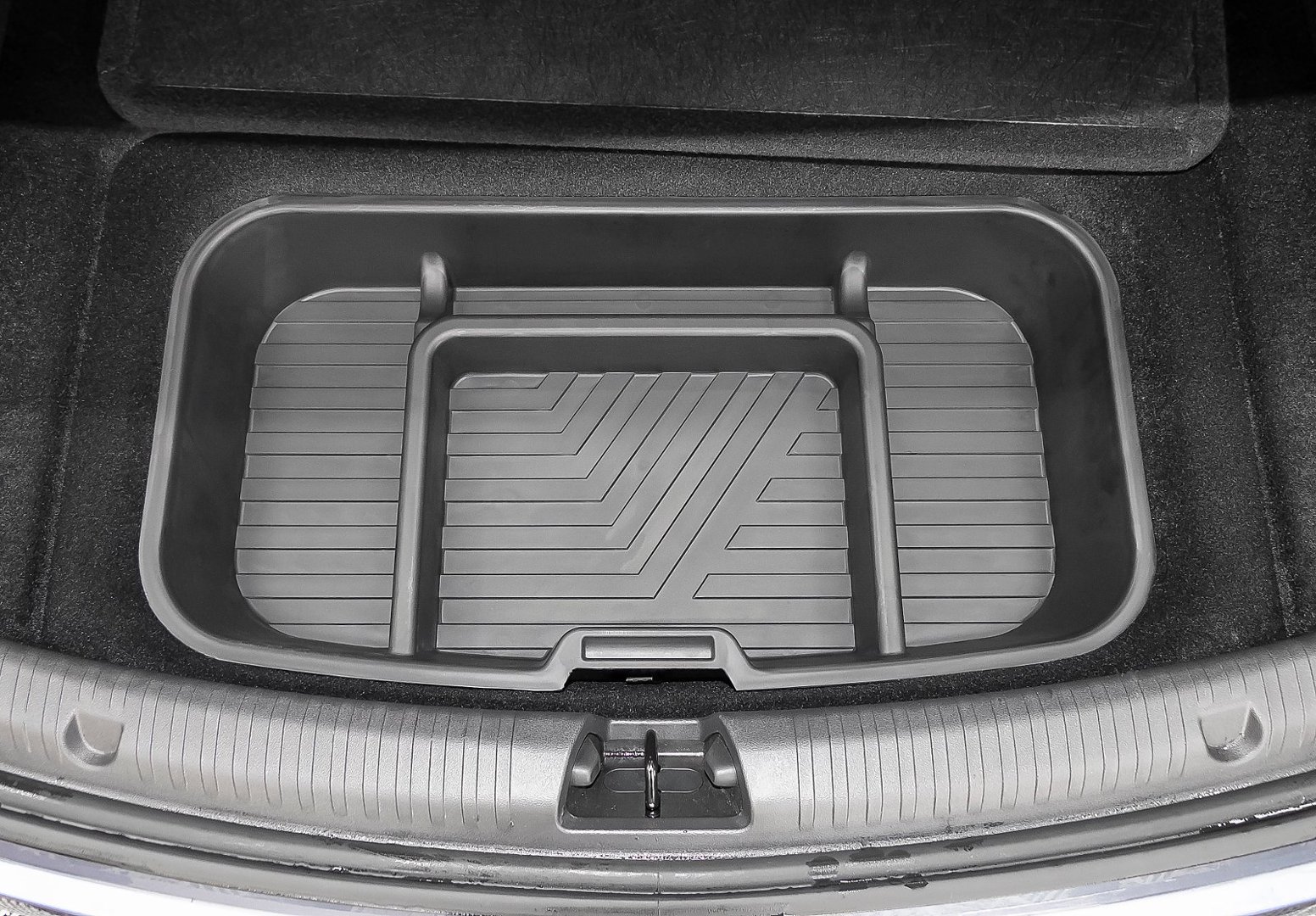
A removable rubber or TPE liner can protect the original compartment and make cleaning faster.
Disadvantages of an EV Frunk
Smaller than the rear trunk
Many frunks are compact and have an irregular shape. They may not accommodate large suitcases or bulky boxes.
More difficult access
Opening the front hood may be less convenient than opening a powered rear liftgate, especially in a crowded parking space.
Limited vehicle availability
Not every EV has a usable frunk. Some vehicles use the front compartment for the electric motor, inverter, cooling system, 12-volt battery or other components.
Weight limitations
The frunk has a manufacturer-specified weight limit. Overloading it can damage the compartment, hood mechanism or surrounding structure.
For example, Tesla’s Cybertruck owner documentation lists a front trunk capacity of 200 kg and emphasizes that vehicle loading limits depend on both volume and payload capacity.Tesla Cybertruck Owner’s Manual
Heat and temperature concerns
The front compartment may become hot or cold depending on its location and insulation. Users should avoid storing temperature-sensitive products, aerosols or other items that require controlled conditions.
Can You Install an Aftermarket Frunk?
Some EVs are designed with an empty or partially unused front compartment, making an aftermarket frunk tub or storage insert possible.
An aftermarket frunk installation may include:
- A molded storage tub
- Mounting brackets
- Drain plugs
- Sealing strips
- Hood struts
- Wiring for lighting
- A power-lift mechanism
- A waterproof liner or cargo mat
However, compatibility is vehicle-specific. Before installation, check:
- Vehicle make, model and production year
- Motor and drivetrain configuration
- Existing wiring and electrical components
- Available mounting points
- Hood clearance
- Weight capacity
- Waterproofing and drainage
- Warranty implications
The installation should not interfere with high-voltage components, cooling systems, crash structures, pedestrian safety systems or hood release mechanisms.
For this reason, a frunk accessory should be marketed as vehicle-specific, not universal, unless it has been properly tested across multiple models.
How to Install a Frunk Liner
A removable frunk liner is usually easier to install than a complete aftermarket frunk tub.
Basic installation process
- Remove all items from the front storage compartment.
- Clean and dry the original surface.
- Test-fit the liner before removing any protective film.
- Check that the liner does not block drain holes, latches or wiring.
- Press the liner into the corners and around the side walls.
- Confirm that the hood closes normally.
- Remove and clean the liner periodically.
A good EV frunk liner should have a precise vehicle-specific fit, raised edges, anti-slip texture, waterproof construction and easy removal.
Is a Frunk Worth It?
For many EV owners, a frunk is most valuable as an organization tool rather than as a replacement for the rear trunk.
It is particularly useful for people who:
- Travel frequently
- Carry charging equipment
- Go camping or hiking
- Transport groceries
- Have children or pets
- Carry tools or emergency equipment
- Want to keep the rear trunk clean and organized
However, the value depends on the actual size and shape of the compartment. A small frunk may be useful for cables and emergency supplies but may not justify an expensive aftermarket conversion.
Conclusion
A frunk is the front storage compartment of an electric vehicle, while the trunk is usually the main storage compartment at the rear. The frunk is typically smaller, but it gives EV owners extra cargo capacity and a convenient place to store charging equipment, tools, groceries and outdoor gear.
For the best user experience, a vehicle-specific waterproof frunk liner or organizer can improve protection, cleanliness and storage efficiency. Before purchasing or installing an aftermarket frunk product, always confirm model compatibility, weight limits, clearance and safety requirements.